

It is often forgotten that Ford once had a French division, the origins of which date back to 1916In the aftermath of the economic recession of the 1930s and the imposition of high import duties by France, the French Ford division entered into a joint venture with the French company Mathis, leading to the creation of a new company called Matford. The partnership with Mathis faded and came to an end with the outbreak of the war, leaving Ford SAF (Société Anonyme Française) to stand on its own, albeit with support from the American headquarters in Dearborn. |
 |
Belgian Legacy: The Simca Abarth 1300 GT Corsa and its Le Mans HistoryAt the behest of the then French Ford SAF director Maurice Delfus, the Vedette, a derivative of an American Ford, was launched. This sedan was complemented in 1952 by the luxurious Vendôme and the sporty-looking Comète, both of which were built exclusively in France. The most elegant of this duo was undoubtedly the Comète, which was designed by the Italian Farina and built by the French company Facel, which later launched its own luxury model, the Vega. In November 1954, Ford SAF merged with Simca. Ford retained just over 15% of the shares but fully withdrew from Simca in 1958. This link is why the Comète is referred to as a Simca-Ford. By the way, the top version, the Comète Monte Carlo, was still marketed as a Simca until mid-1955. |
Simca-Ford Comète 1952: The Beginning of a Luxurious and Sporty LegacyThe Comète on display in the museum dates from 1952 and is one of the first examples, recognisable by its two-part radiator grille with a chrome centre piece. This first version of the Comète was equipped with steel wheels with chrome hubcaps. Initially, the car was powered by a 2.2-litre V8, a so-called flathead with side valves, coupled to a manual four-speed gearbox. Despite the V8 and the sporty appearance of the Comète, the power remained modest at 80 hp, resulting in corresponding performance. In early 1954, Ford SAF launched the Comète Monte Carlo, equipped with the Mistral V8, which had a substantial engine capacity of 3.9 litres and an output of 105 hp. At the same time, the Comète received a new radiator grille and introduced spoke wheels. The name Mistral cannot disguise the fact that the V8 was originally used in utility vehicles. Due to its large engine size, this version was heavily taxed in France, and its fuel consumption was not exactly budget-friendly. |
 |
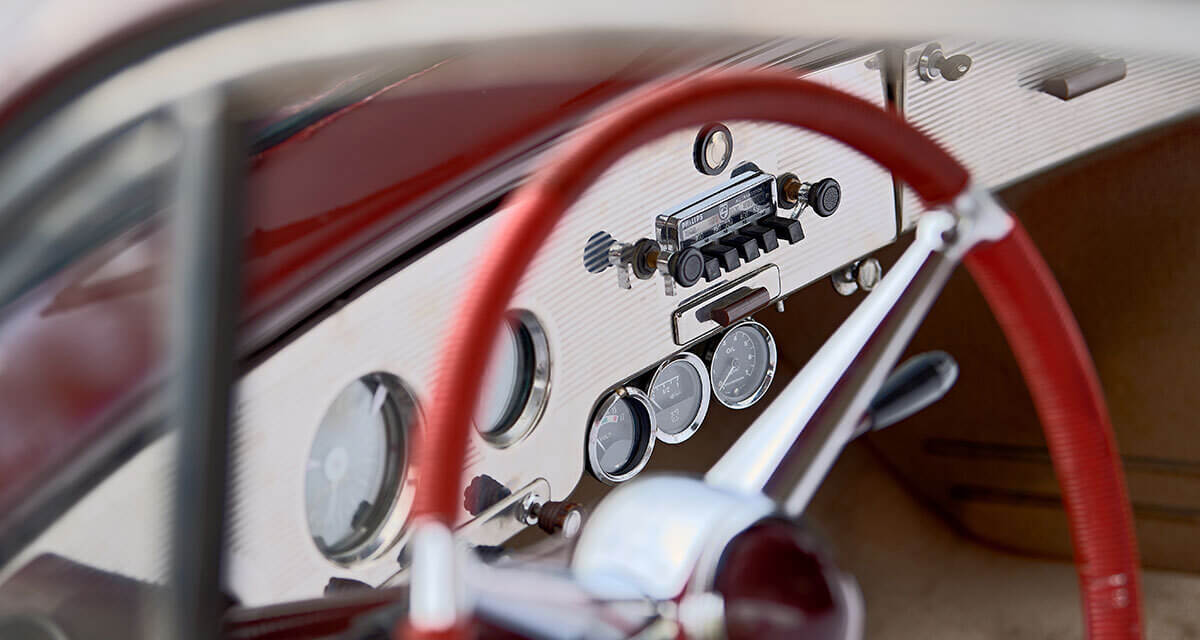 |
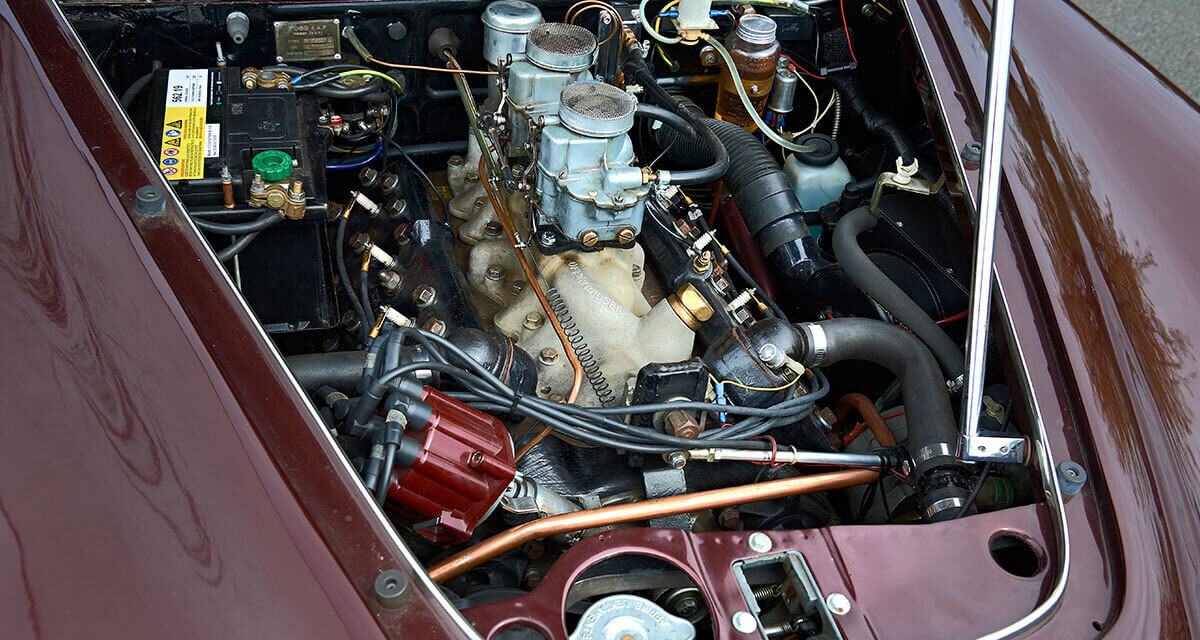
Restoration and Upgrades: The Transformation of the Simca-Ford ComèteOne of the previous owners of the car on display in the museum had the original 2.2-litre engine replaced in France with a 4.2-litre engine from a Simca truck. The roof was also given the beautiful and unique floral design. The Dutchman who sold the car to the museum carefully documented all the work done. For example, the car also received new upholstery, while the engine was fitted with special pistons and a modified camshaft. Additionally, an Offenhauser intake manifold with two carburettors was chosen. To complete the restoration and upgrades, the entire bodywork was removed and checked during the work. Between 1951 and 1954, just over 3,000 examples of the Comète were built, of which around 800 were the Monte Carlo version. |