

The Simca Abarth 1150 SS Corsa is One of the Rarest Cars in the Museum’s CollectionThis car proves that Abarth didn’t only build sports cars based on Fiat bodywork and drivetrains. The foundation could just as easily come from Porsche, Ferrari, Cisitalia, or indeed, Simca. That said, there is a Fiat connection for this Simca Abarth 1150 SS Corsa. In the late 1950s, Fiat was working on a potential successor to its popular 600 model, which debuted in 1955. One path was 'Project 119', also known as the 'Tipo 100 G', which eventually led to the two-door Fiat 850. As an alternative, there was 'Project 122' with a clean-lined four-door body. |
 |
Simca 1000: The Sporty Evolution with AbarthSince Fiat remained the main shareholder of Simca until 1963, Henri Theodore Pigozzi, who led Simca, had access to future Fiat projects. Pigozzi was intrigued by 'Project 122' and saw an opportunity to expand the Simca range downwards. After some modifications, this led to the creation of the Simca 1000, which, with its rear-mounted engine, was set to rival the Renault Dauphine and later the Renault R8. Pigozzi wanted to give the '1000' more flair and presence by introducing a distinctly sporty version. In 1962, Simca and Abarth signed a collaboration for this project — and the result was quick to follow. |
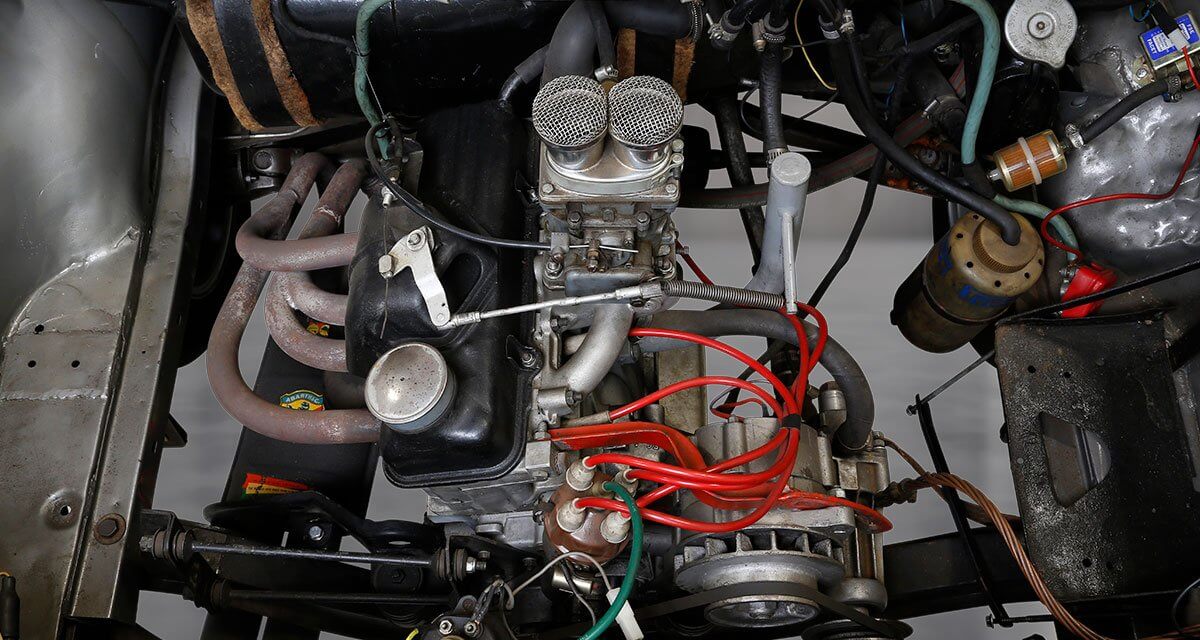
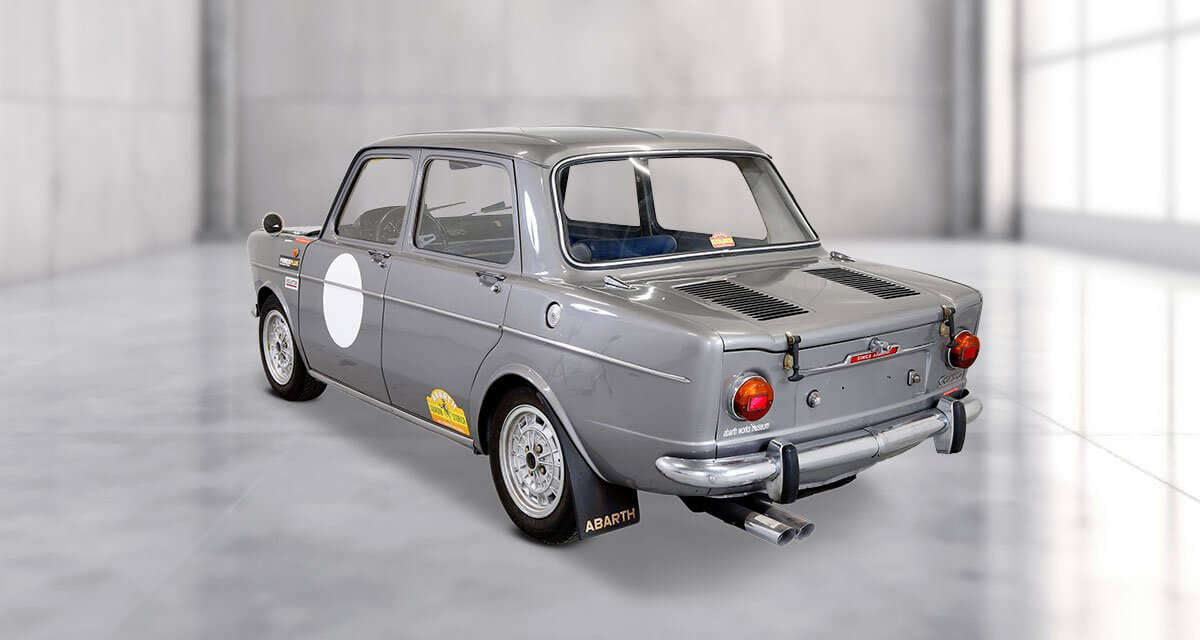
The Abarth 1150: Four Variants of Power and PerformanceAt the 1963 Turin Motor Show, Abarth presented not just one, but four high-performance versions of the 1000. Of this quartet, the 1150 was the base model, followed by the 1150 S, 1150 SS, and finally the 1150 SS Corsa — with respective power outputs of 55, 58, 65, and 85 hp. All four versions shared the same base engine, which was enlarged from 944 cc to 1,137 cc by increasing both bore and stroke. The differences in power stemmed partly from varying compression ratios. The three most powerful variants were easily recognisable by their front-mounted radiators, unlike the base 1150 which retained a rear-mounted one. All 1150 Abarth versions featured special perforated wheels for improved brake cooling, and a horizontal red Abarth badge at both front and rear. |
 |
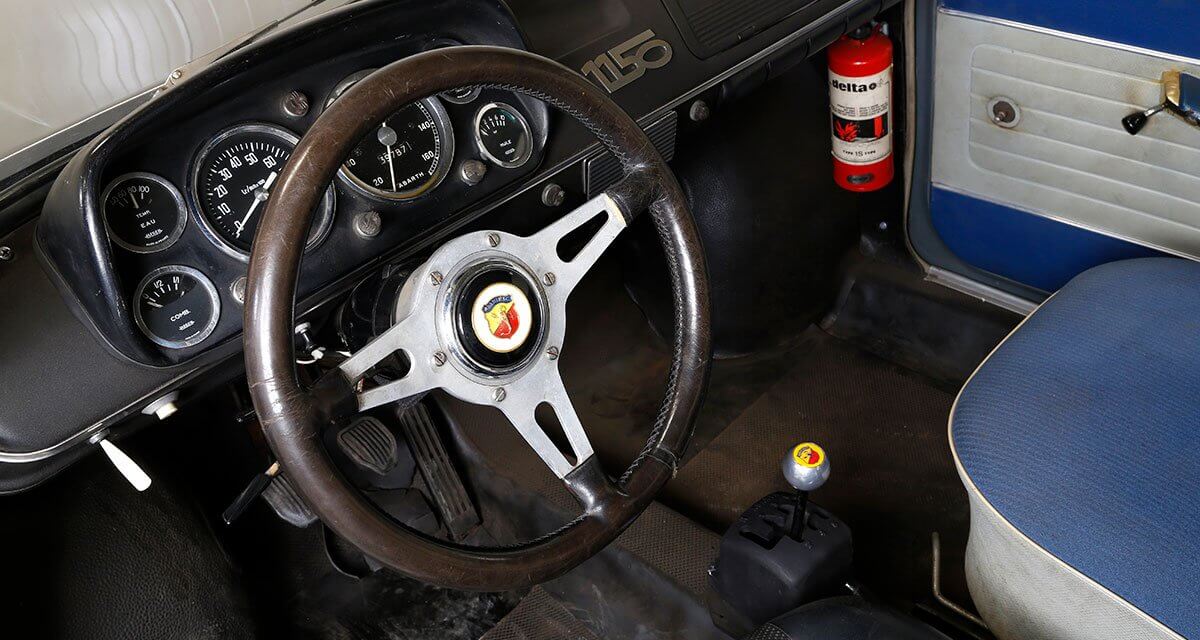 |
Simca Abarth 1150: Limited Production by Chrysler and AbarthOn the three most powerful versions, the Abarth badge was flanked by a shield featuring the famous Abarth scorpion logo. In 1963, Simca came under Chrysler’s control. The new management had little interest in these sporty variants, so sales were handled solely through Abarth and restricted to Italy and Germany. This limited distribution explains why only a small number of these Abarths were produced between 1963 and 1965. Simca supplied pre-assembled body shells to Abarth in Turin, where the mechanical components were installed. |
Unique Simca Abarth 1150 Corsa: From Finnish Ice Tracks to the MuseumThe car now on display in the museum is the only surviving Corsa. Guy Moerenhout discovered the car in Finland. This unique example belonged to the Finnish Simca importer and had been modified for local ice racing. To prevent brake lock-up caused by icy water, the original disc brakes were replaced with drum brakes. Another specific alteration was the two-speed gearbox. Fortunately, the Finnish importer still possessed the original and unique six-speed gearbox. This car had become something of a legend in Finland, having been raced by various local drivers. When Moerenhout exported it to Belgium, it caused quite a stir in Finland, even making it onto national television. |
 |