
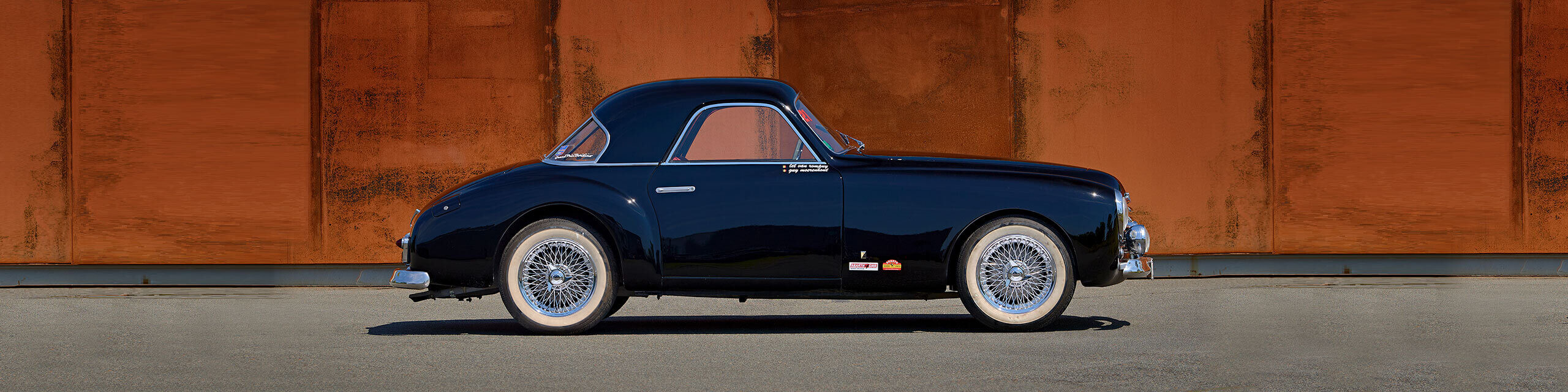
A Total of Just 5,165 Simca 8 Sports Were Ever BuiltTrue exclusivity, then — and not something one would normally associate with Simca. Simca (Société Industrielle de Mécanique et de Carrosserie Automobile) was founded in 1934 by Enrico Teodoro Pigozzi, who later changed his first name to Henri Theodore. Initially, the company was nothing more than a French subsidiary of Italian manufacturer Fiat. Simca produced affordable Fiats under licence to bypass the high import duties of the time. |
 |
Simca 8 Sport: Simca’s Post-War ComebackAfter the Second World War, reviving Europe’s shattered car industry was a major challenge. Pigozzi wanted to give Simca a more distinctive identity, and to succeed, he needed a crowd-pleaser. Enter the 8 Sport, unveiled in 1948 as an open two-seater. A Coupé version soon followed. Pigozzi had fallen for the Italian Cisitalia 202, a 1947 sports coupé designed by Carrozzeria Farina — later known as Pininfarina. |
Simca 8 Sport: A Sporty Reimagining of the CisitaliaIts clean lines and modern aesthetic caused a stir. Pigozzi commissioned Farina to create a version of the Cisitalia for Simca. That task fell to a young Italian designer named Giovanni Michelotti, who was then still on Farina’s payroll and would later found his own design studio. The result was the Simca Sport 8, which entered production in 1950. Simca entrusted construction to the French specialist Facel, who would later establish its own marque, Facel Vega. In addition to the open two-seater, there was the more exclusive Coupé. To justify its price premium over the standard family version of the Simca 8, the Sport was fitted with a more powerful engine — 50 hp instead of 41. Modest by today’s standards, but enough at the time to give the 8 Sport a top speed of 135 km/h, all from a small 1,221 cc four-cylinder. |
 |
 |
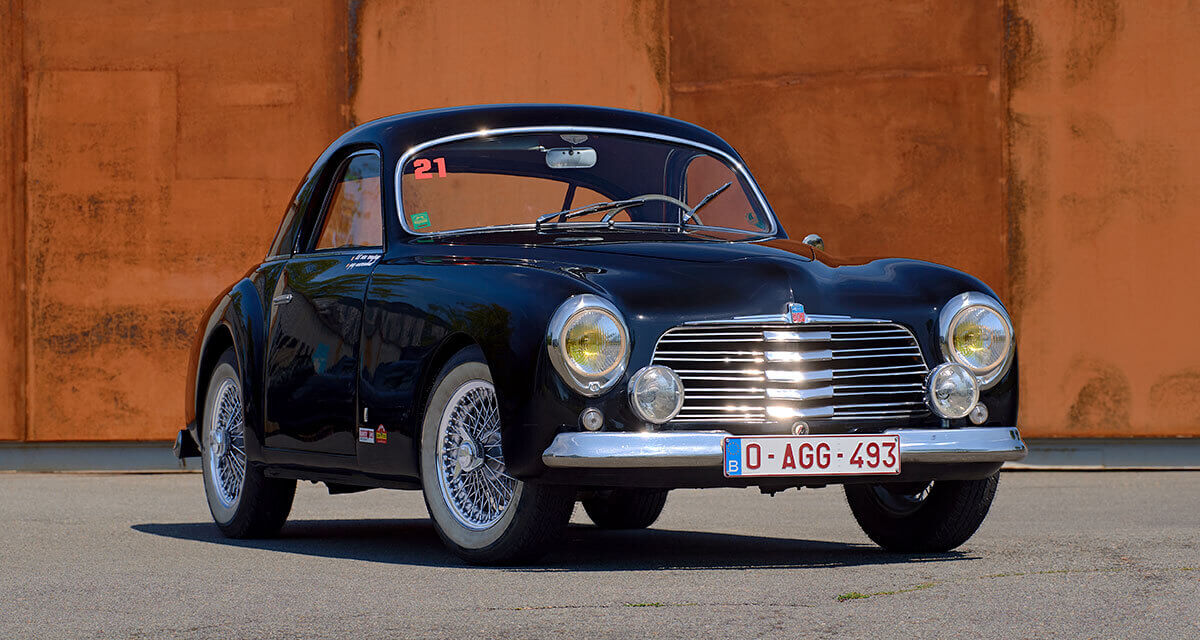
Simca 8 Sport: Design as the Key IngredientThe Simca Sport 8 didn’t stand out so much for its performance, but rather for its design: Simple lines with modern touches for the time, such as a horizontal grille, integrated headlights, and full-width bodywork without running boards. The badges, lights, and door handles act as subtle decorative details. The door handles are slim, flush with the bodywork, and pop out when opening the door. |
Simca Sport 8: Design and Restoration in DetailThe rear lights are seamlessly integrated into the curves of the bodywork, while the headlights give this Coupé a friendly 'face'. The clarity of the design and attention to detail are just as evident in the interior. The beautiful example on display in the museum features several Abarth modifications such as twin carburettors and an upgraded intake manifold. The car was restored in the Netherlands, then sold to Greece, where it had two owners and underwent further restoration — before finally arriving in Lier. |