

In the early 20th century, especially after WWI, there were two European car manufacturers successfully engaged in mass production: Citroën and FiatRemarkably, both brands are now, over a century later, part of the same industrial group: Stellantis. Fiat stands for ‘Fabbrica Italiana Automobili Torino’ and was founded in 1899 by Giovanni Agnelli. The 501, produced between 1919 and 1926, was Fiat’s first completely newly developed car after WWI and played a crucial role in establishing the Turin-based automaker as a mass producer. |
 |
Fiat 501: From Production Model to Racing LegendNearly 70,000 units were built in total, which was a significant number for that time. Based on the 501, a so-called Biposto (two-seater) was developed in two versions: the S and SS, introduced in 1921. With these models, Fiat successfully participated in motor racing, notably the Mille Miglia, continuing its pre-WWI involvement in motorsports. |
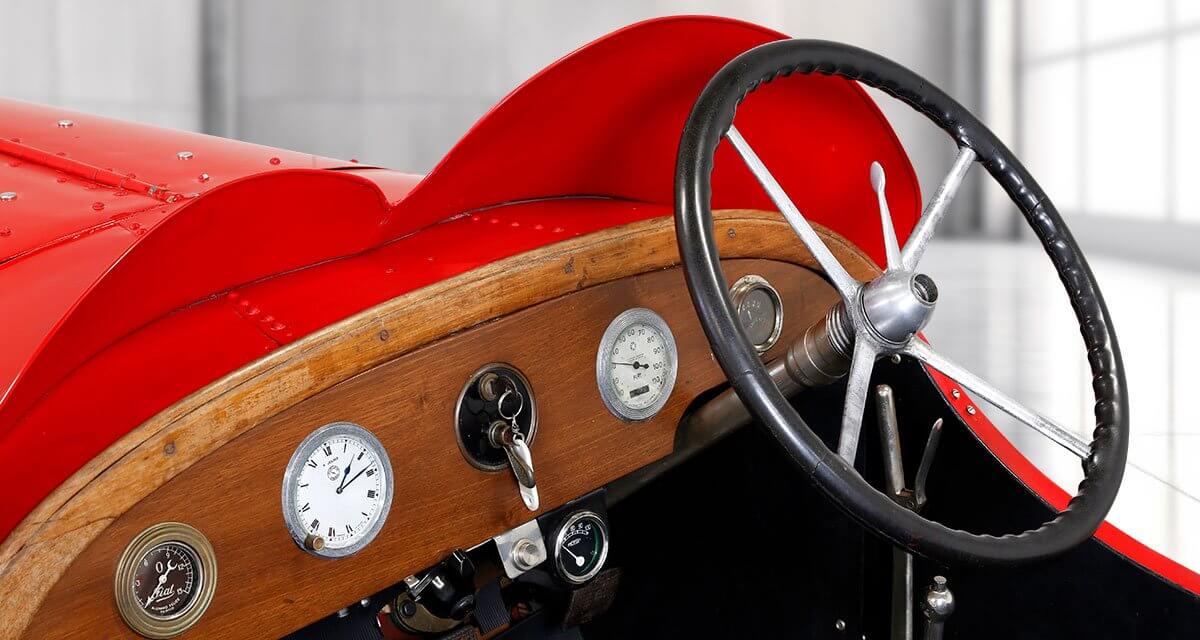
Fiat 501 SS Corsa: The Racing Model Born of Agnelli’s PassionAgnelli had a deep passion for motorsport and even took part in races as a driver himself. The 501 SS Corsa on display in the museum dates from 1924 and, as a racing car, holds an ACI certificate (Automobile Club d’Italia) numbered 4397/P, qualifying it for the Mille Miglia. The Biposto is built on a separate chassis onto which the engine, transmission, and suspension of the standard 501 are mounted. The engine is a 1,460 cc side-valve four-cylinder with a flathead and is fed by a single carburettor. |
 |
 |
Fiat 501 SS Corsa: Power and Engineering of the 1920sThese features result in a smooth-running engine with a limited maximum speed of 3,000 rpm. The SS version produces a maximum of 30 hp, while the S produces 27 hp. The SS reaches a top speed of 85 km/h. Modest by today's standards, but in its day, that was impressive—especially considering the road conditions and vehicle technology of the time. Both front and rear axles are rigid and mounted on leaf springs. The tyres are narrow, and braking is provided only at the rear via drum brakes, cable-operated. The 501 SS is equipped with a four-speed gearbox, and power is transmitted to the rear wheels via a driveshaft. |
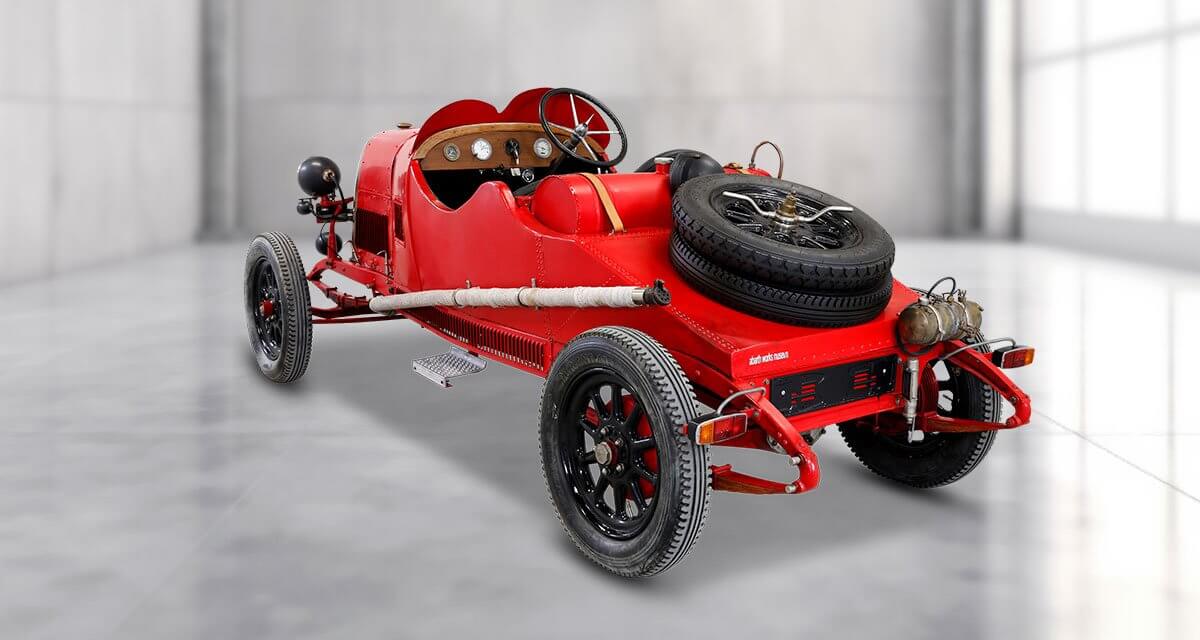
Fiat 501 SS Corsa: The Unique Features of an Early Racing CarThe 501 SS is right-hand drive. The gear lever is positioned far to the side, under the driver’s right leg—something that requires some getting used to, as does the accelerator pedal, which is placed in the middle rather than on the right. To start the engine, the fuel must be pumped manually. The petrol tank is located behind the two seats. On the rear deck of the body, there is room for two spare wheels. The museum’s car was purchased in Italy and proves that Fiat was building sporty models long before Abarth ever came into existence. |
 |