

It was in 1970 that the idea arose within the CSAI (Commissione Sportiva Automobilistica Italiana) to develop an Italian racing formula with identical single-seaters for young drivers up to the age of 26To realise the concept, the CSAI turned to the Fiat Group. The project ultimately landed with Abarth, which became part of the Fiat Group in 1971. The project was led by Sergio Seccatore, and his brief was clear. The car at the heart of the project had to be affordable and easy to maintain for aspiring drivers, using as many existing and proven components as possible. |
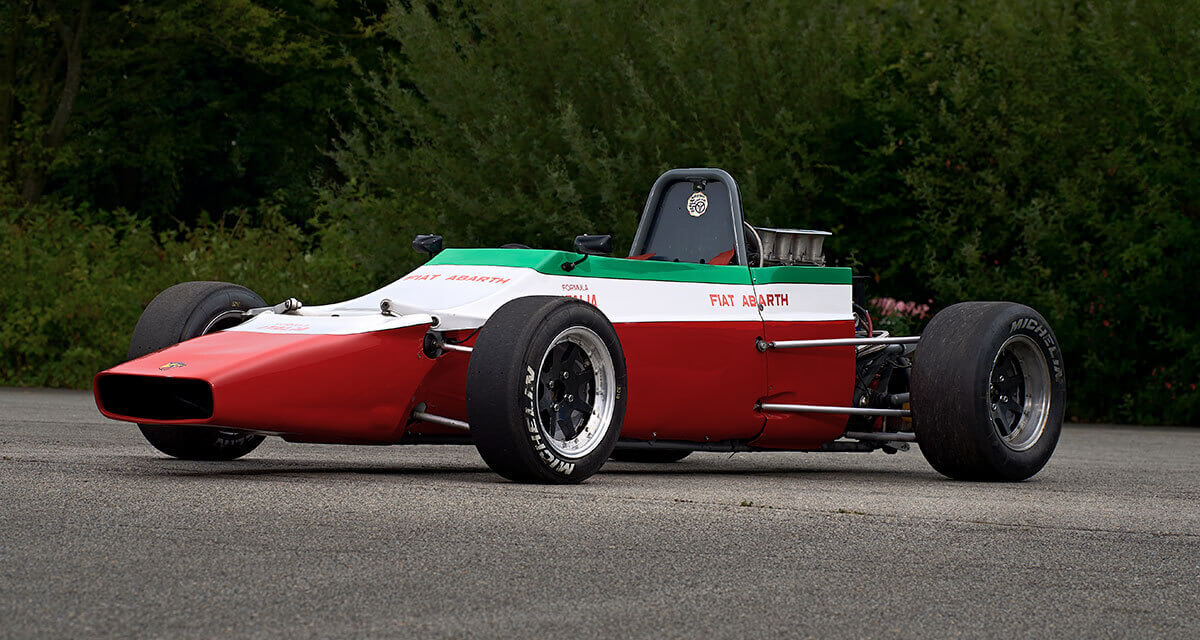 |
The Rise of the Formula Italia Abarth SE 025: Lightweight, Fast Single-Seater for Talent DevelopmentThe result was the Formula Italia Abarth SE 025, where SE stands for ‘Studio Esperimentale’. The single-seater was first unveiled at the 1971 Turin Motor Show. A year later, the first race took place and the championship kicked off on Italian circuits like Monza, Imola, and Vallelunga. Aspiring drivers competed in identical cars, allowing their skill to shine through. This formula was highly successful and ran until 1979. The Formula Italia Abarth SE 025 is a lightweight car, tipping the scales at just 470 kg. Despite a relatively modest power output of 115 hp, this gives the single-seater lively performance with a top speed of 200 km/h. The Abarth is based on a tubular chassis with glass-fibre reinforced body components. |
Safety and Agility: Technical Innovations of the Formula Italia Abarth SE 025Development placed significant emphasis on driver safety. Despite the inevitable ‘close racing’, no serious injuries occurred during the years the formula existed. The Formula Italia Abarth SE 025 is appreciated for its agile handling and light-feeling steering. The front suspension features parallel wishbones combined with in-board springs. For propulsion, the choice was a rear-mounted Fiat-Abarth four-cylinder engine with twin overhead camshafts and a displacement of 1608 cc. |
 |
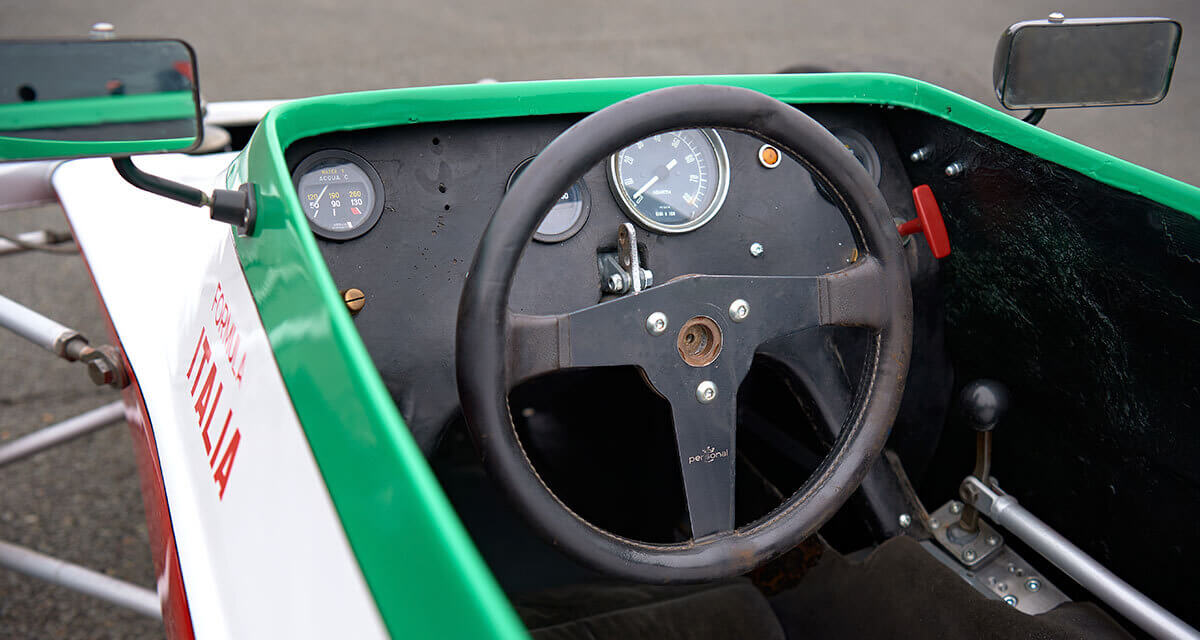 |
Engine and Components: Technical Specifications and Cost-Saving Measures of the Formula Italia Abarth SE 025This engine had already proven its worth in models such as the Fiat 124 Sport. Bore and stroke both measure 80 mm. The compression ratio is relatively high at 9.8:1. The four-cylinder breathes through two twin Weber 40IDF carburettors and is paired with a Lancia Fulvia HF five-speed gearbox. For the braking system, many components—such as the discs and single-piston calipers—were sourced from the Fiat 125 S. In a further effort to reduce costs, the front wheels came from the Fiat 124 Sport and the larger rear wheels from the Fiat Dino. |
Cooling System and Careers: Innovations and Legacy of the Formula Italia Abarth SE 025One clever feature of this Abarth is that the coolant flow between the front-mounted radiator and the engine runs through the two lower chassis tubes. Many drivers began their careers in the Formula Italia Abarth SE 025. These include the late Ferrari works driver Michele Alboreto, as well as Bruno Giacomelli, Piercarlo Ghinzani, Riccardo Patrese, and Siegfried Stohr. The example in the museum was once Belgian hill climb champion. |