
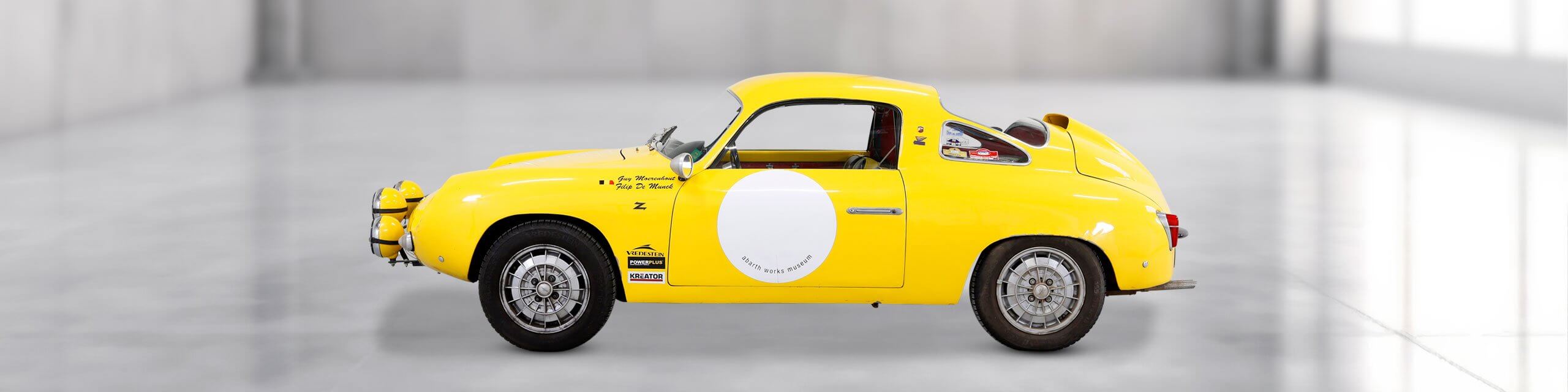
Several GT versions of the Fiat Abarth 750 were based on the Fiat 600 chassis introduced in 1955One of these is the 750 ‘Double Bubble’, or ‘Doppia Gobba’ in Italian, an example of which is also on display in the museum. ‘Double Bubble’ refers to the roof, which, in classic Zagato style, features two distinctive domes. As an alternative, there was the GT known as the 750 ‘Sestriere’, and lastly, the 750 Record Monza—a third GT model also shaped by Zagato’s hand. |
 |
Abarth 750 Record Monza: unique styling and design featuresThe Record Monza, such as the yellow example in the museum, stands out in a number of distinctive ways. Unlike the ‘Double Bubble’, the roofline is lower and does not feature the characteristic Zagato twin domes. The engine cover is also differently styled, replacing the twin bulges with a single, wide air intake scoop. |
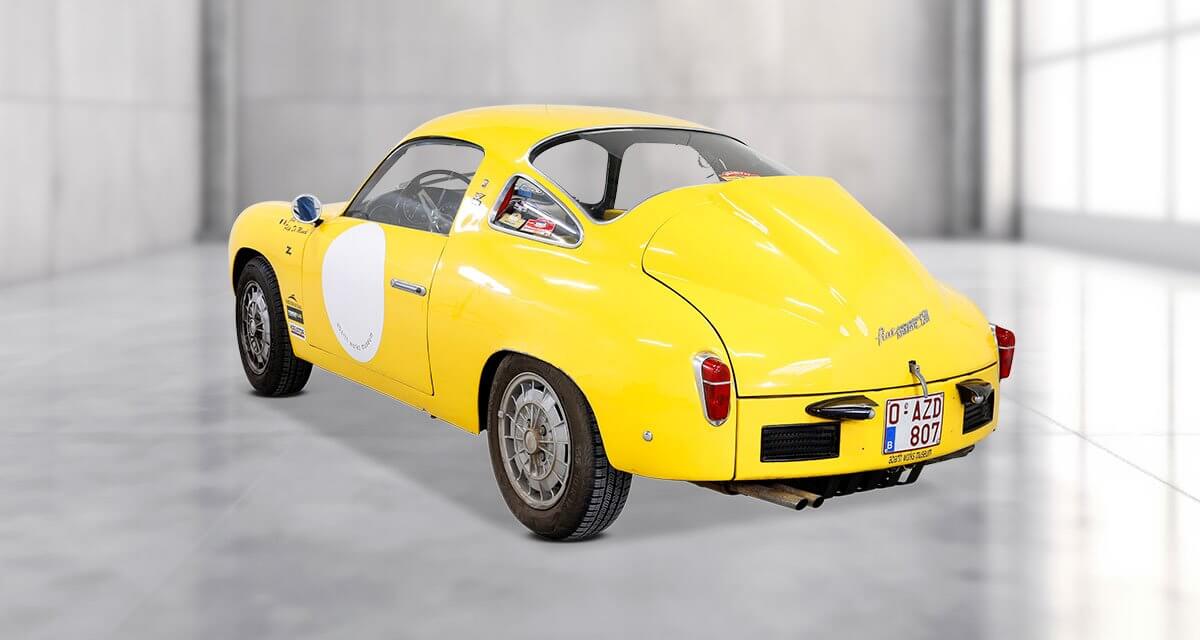
Abarth 750 Record Monza: engine upgrade, lightweight design, and unique detailsThe original 58 bhp engine was replaced with a 90 bhp version. The four-cylinder engine features a side-mounted camshaft and the radiator is located at the rear right next to the engine. Aside from the front transverse leaf spring suspension, the Record Monza also retains the standard Fiat 600’s rear lights. To reduce weight, the body is made of aluminium, and both the rear window and the two small rear side windows are made from plexiglass, each framed in chrome. A nice detail is the Zagato ‘Z’ badge on each of the front wings. The Record Monza also features flush door handles that spring out to open the doors. |
 |
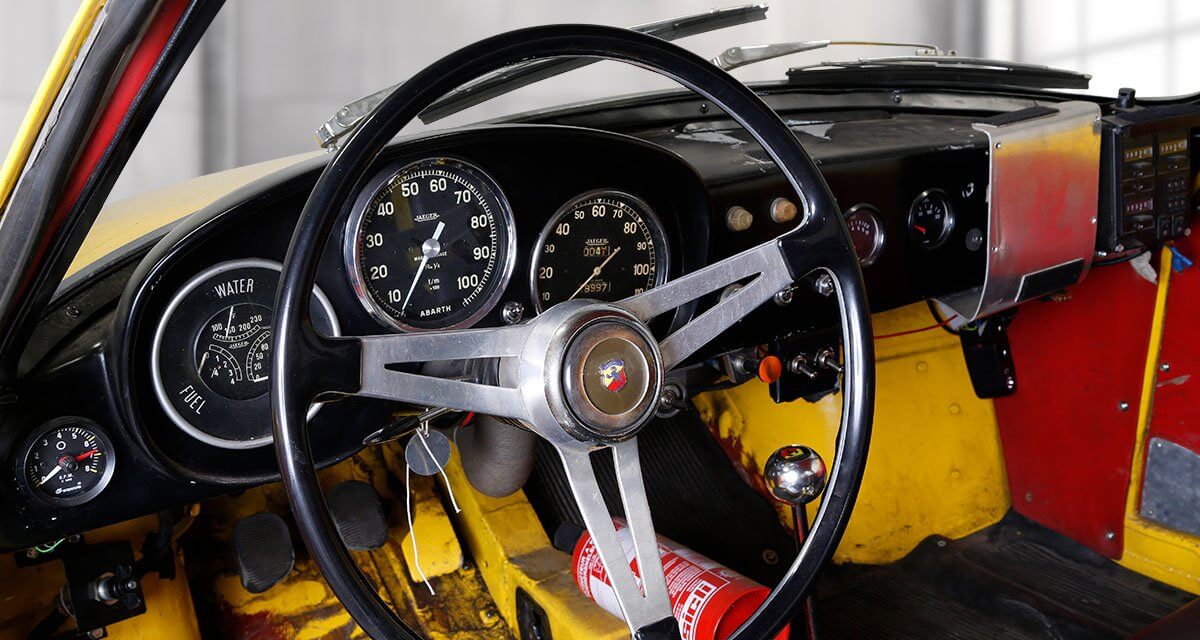 |
Record Monza: interior, US success, and racing historyThe interior features two seats, with the driver’s seat offering lateral support. Behind the three-spoke Nardi steering wheel are three large round Jaeger gauges. Notably, the speedometer is calibrated in mph (miles per hour) instead of km/h. The typical Italian labels ‘olio’, ‘benzina’, and ‘acqua’ are replaced by ‘oil’, ‘fuel’, and ‘water’. There’s a reason for this: most Record Monza models were exported to the United States. The car amassed an impressive racing record there and became the most successful Abarth model in the US. Abarth cars from Franklin D. Roosevelt Jr.’s team—yes, the son of the late President Roosevelt—won more than 700 races worldwide. The museum’s car participated in events such as the Sebring 4-Hour Race, held at one of America’s oldest circuits, where the first race took place in 1950. The yellow example on display is therefore an exceptionally rare and valuable vehicle. |
Fiat Abarth 750 Record Monza: modifications for Jean-Marie Cols and rally heritageThe museum’s car is fitted with 13-inch wheels instead of the original 12-inch ones, which explains the rather rudimentary widening of the rear arches—done purely for practical, not aesthetic, reasons. This modification was made when the car was sold to Belgian and European rally champion Jean-Marie Cols, better known as Didi, who wasn’t too concerned with preserving originality. The car has participated in various rallies at home and abroad, achieving notable successes including victories in the Liège-Rome-Liège and the Coup de Corse. It is still used today in rallies and hill climb events. The Fiat Abarth 750 Record Monza was also one of the first cars (in 1958) to be equipped with a roll cage—before it became mandatory. |
 |