

The introduction of the Fiat 600 in 1955 was crucial for the post-war development of the Italian car industryNot only did Fiat benefit, but numerous specialised manufacturers like Abarth and design and coachbuilding companies such as Carrozzeria Viotti also reaped the rewards. Just one year after the launch of the Fiat 600, Viotti introduced a 2+2 coupé equipped with the standard 633 cc Fiat engine, producing a modest 22 hp. The bodywork was designed by Giovanni Michelotti and featured typical 1950s styling, such as panoramic front and rear windscreens and tail fins—although on this coupé, the fins were rather small compared to other cars of the era. |
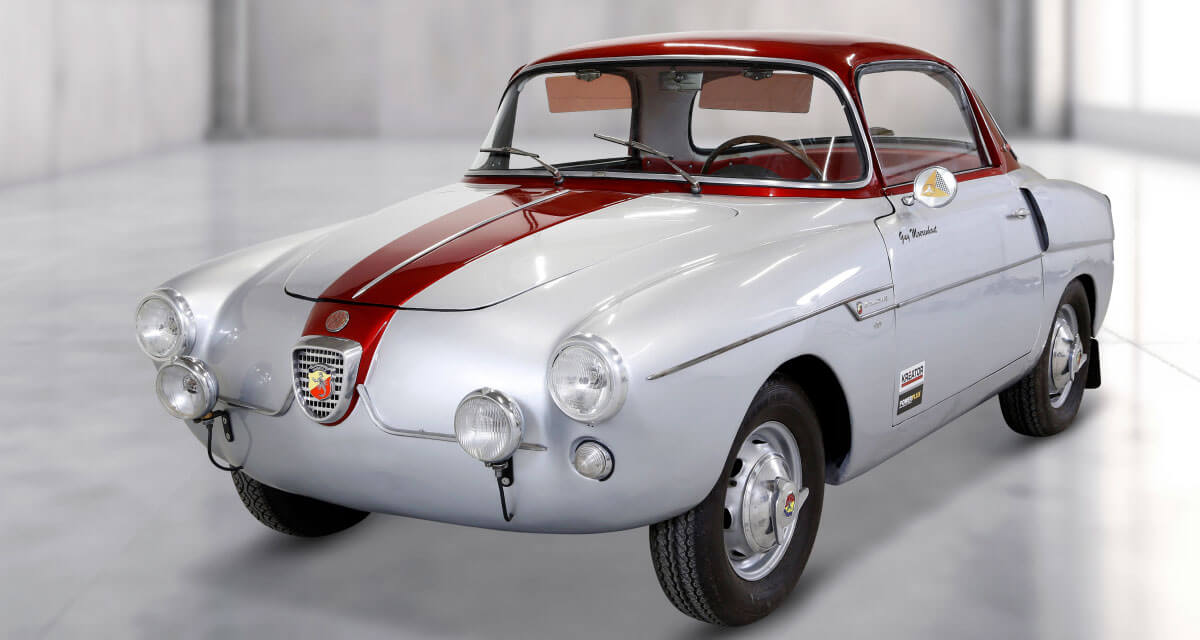 |
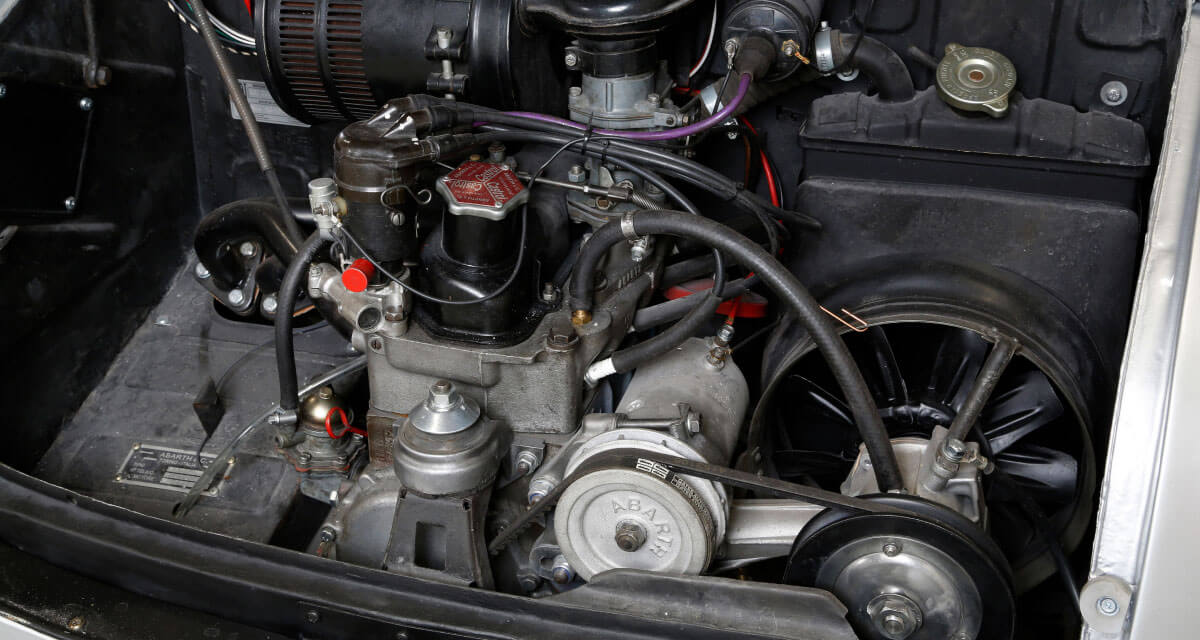
The rare Fiat Abarth 750 GT Coupé Viotti: style and power in miniatureThe Viotti 2+2 Coupé also served as the basis for the extremely rare Fiat Abarth 750 GT Coupé Viotti, as displayed in the museum, of which only a handful were built. The body of the Abarth version retains the general contours of the standard Fiat coupé and is made entirely of steel, except for the aluminium bonnet. Visually, the difference lies in a few distinctive stylistic details and, of course, the engine. Abarth equipped the Viotti with an upgraded 747 cc engine producing 44 hp. This four-cylinder engine was mated to a four-speed manual gearbox. The suspension is related to the standard Fiat 600 and features a transverse leaf spring at the front combined with independent control arms. Drum brakes are fitted all around. |
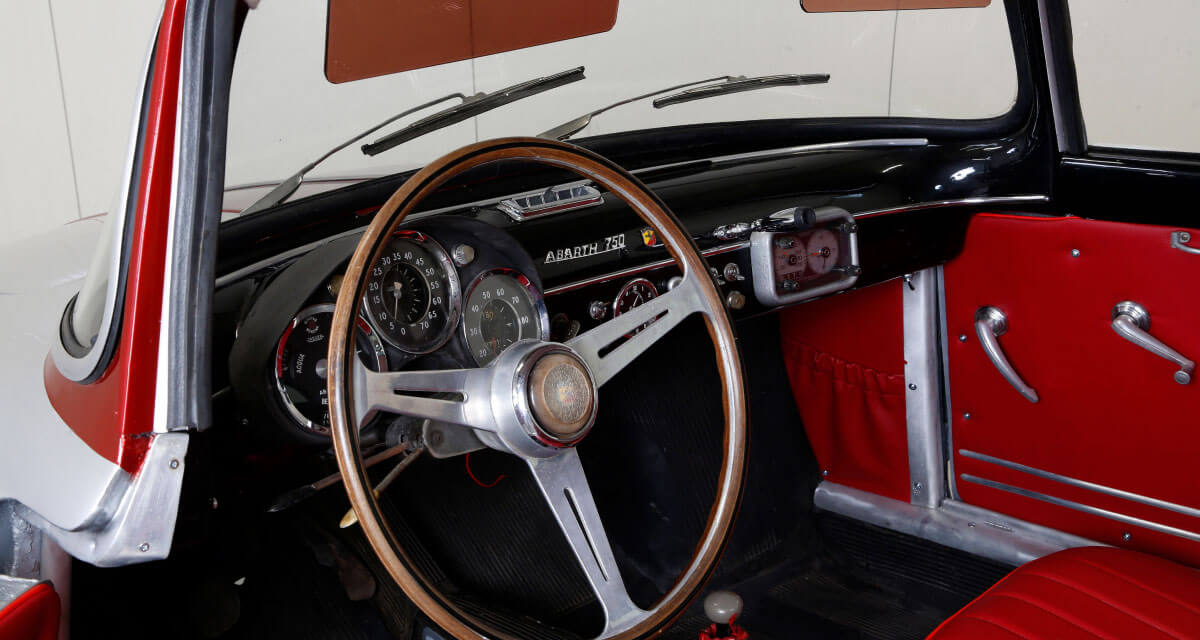
Distinctive features of the Fiat Abarth 750 GT Coupé ViottiOn the outside, the Fiat Abarth 750 GT Coupé Viotti stands out with its custom Abarth badges, most notably the centrally mounted Abarth shield at the front. The interior is very special. The original simple horizontal gauge from the Fiat 600 has been replaced with three large round Jaeger dials. The basic two-spoke Fiat steering wheel was swapped for a stylish three-spoke Nardi wheel with a wooden rim, and the gear lever is encased in a leather gaiter. |
 |
 |
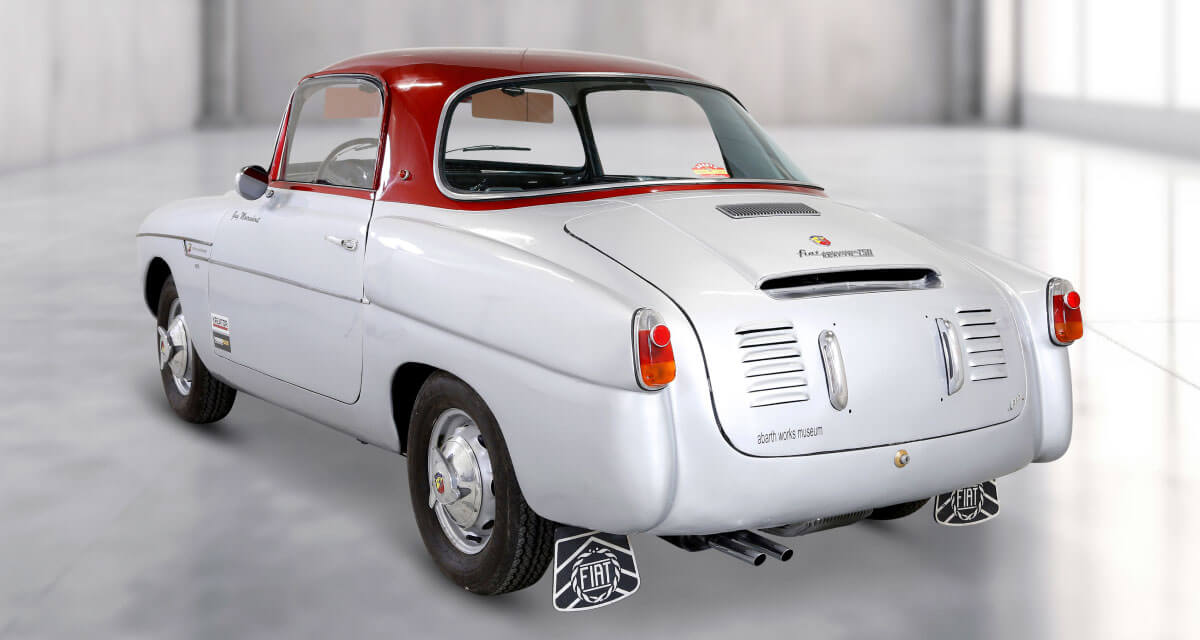
Restored heritage: from discovery to concours-worthy Fiat AbarthThe car from the museum was found in France. The restoration process was quite challenging, as many specific components were missing. The original and rare two-tone paint combination from the 1950s was discovered beneath the surface and carefully restored. With its distinctive wing nuts on the wheels, the car is suitable for a concours d’élégance but equally well-suited for a hill climb race. Incidentally, the museum’s car is equipped with a Swedish Speedpilot and a reading lamp for the co-driver—handy for regularity rallies. |
Carrozzeria Viotti: forgotten pioneer of post-war coachbuildingIn Northern Europe, Carrozzeria Viotti—responsible for this little 2+2 Coupé—is less well known. Yet, the coachbuilder from Turin played a key role during the 1950s. Among its employees were renowned designers Giovanni Michelotti and Pietro Frua, who later went their separate ways. Founder and manager Vittorio Viotti also played an important part in the breakthrough of the estate car in post-war Europe. His most commercially successful creation in that field was the Fiat 1100 Giardinetta from 1953. Viotti patented the name Giardinetta, meaning that later estate versions not involving Viotti had to be called Giardiniera. |
 |