

The Fiat 600, launched in 1955, was of great importance to the Turin-based car giantIn total, nearly five million units found buyers worldwide. The 600 was not only produced in Turin but also in Spain (SEAT), the former Yugoslavia (Zastava), Germany (Neckar), and South America, including Argentina. The Fiat 600 was not only a commercial success but also became a source of inspiration for coachbuilders and tuners alike, including Abarth. |
 |
Abarth 750: the first steps toward more powerIn 1956, Carlo Abarth introduced the Abarth 750, which retained the original saloon bodywork of the mass-produced 600 with only a few subtle modifications. In the Abarth version, the original 633 cc four-cylinder engine was enlarged to 747 cc, almost doubling the power output from 23 bhp at 4,000 rpm to 44 bhp at 6,000 rpm. But that was only the beginning. The next step, in collaboration with Milanese design and coachbuilding firm Zagato, was the launch of a GT model. |
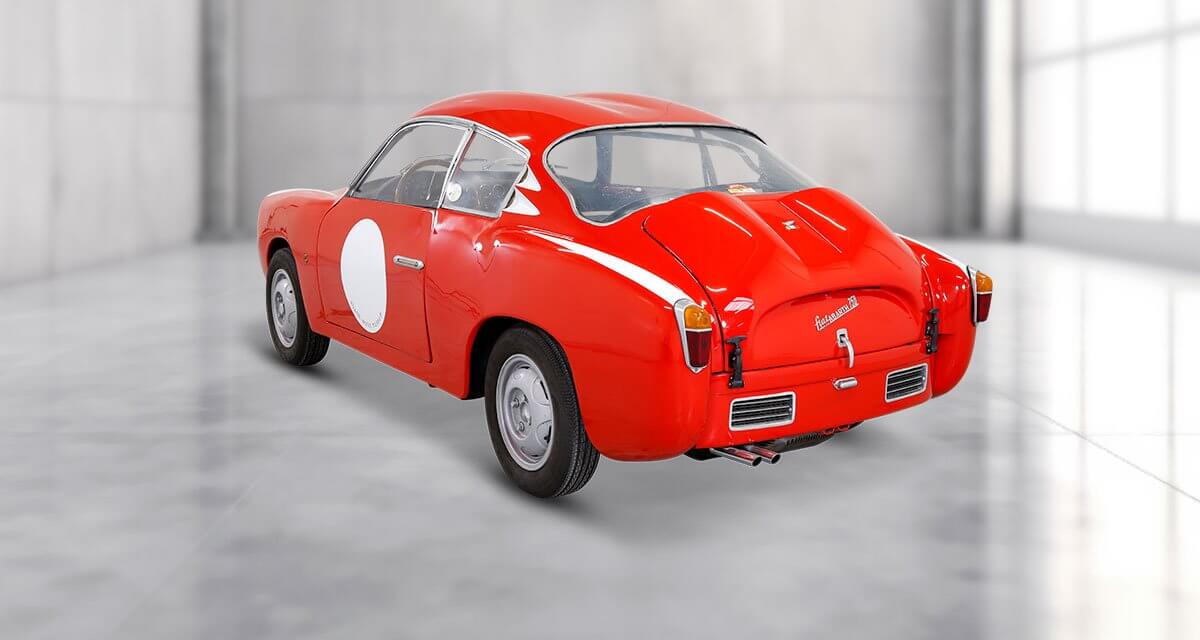
Abarth 750 Zagato: lightweight design and performanceThe Zagato featured a streamlined, lightweight aluminium coupé body with the 747 cc engine mounted at the rear. It was 8.1 cm lower and 1.5 cm shorter than the sedan-based 750, making the 750 Zagato particularly nimble and lightweight. A signature feature of Zagato design is the twin-hump roof—known as the ‘Double Bubble’ or ‘Doppia Gobba’ in Italian. This styling cue was carried over to the engine cover at the rear, where it also served the practical function of increasing airflow to the engine compartment. Not all 750 Zagatos were the same and differed in details such as lighting, bumpers, and badges. |
 |
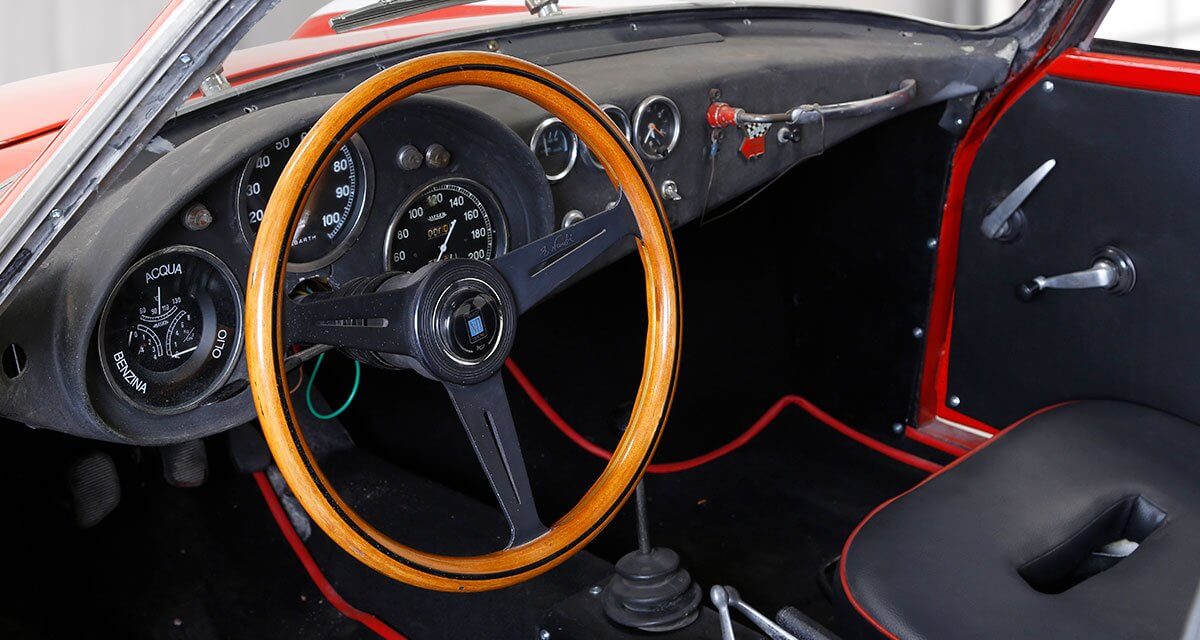 |
Abarth 750 GT Zagato: interior features and racing historyThe interior features a three-spoke steering wheel with a trio of round Jaeger dials positioned behind it. Abarth 750 GT Zagatos were produced between 1956 and 1959. The rarest version is undoubtedly the Corsa, of which fewer than 25 were built. Most of these ended up in the United States, where they saw success racing in the SCCA. The example in the museum was brought from America to Belgium and was in very poor condition. The GMR team carried out a full restoration. A second 1956 example is also on display, on loan from Bruno Van Ballart. |
Abarth 750 GT Zagato Corsa: lightweight and special engine variantThe Abarth 750 GT Zagato Corsa is 4 cm shorter than the standard version. Total weight is further reduced to 535 kilograms, thanks to features such as plexiglass side and rear windows. Also unique are the sand-cast aluminium wheels. At the rear is a so-called AH engine with a specially cast block featuring thicker walls between the cylinders. The crankshaft and connecting rods are polished, and the sump is fitted with cooling fins. An AH engine costs three to four times more than a standard one. Braking is handled by finned aluminium drum brakes. |
 |