

In July 1957, two years after launching the popular 600, Fiat introduced the rear-engined 500The tiny newcomer, measuring just 2.97 metres in length, was named the Nuova 500 to distinguish it from the earlier Fiat 500—better known as the Topolino—which was produced between 1936 and 1955. To avoid cannibalising sales of the 600, the 500 was given a basic specification, had only front seats to make room for luggage in the rear, and featured a modest air-cooled two-cylinder engine producing just 13 bhp. It also came with a partially roll-back canvas roof that extended all the way to the engine lid and included the rear window. |
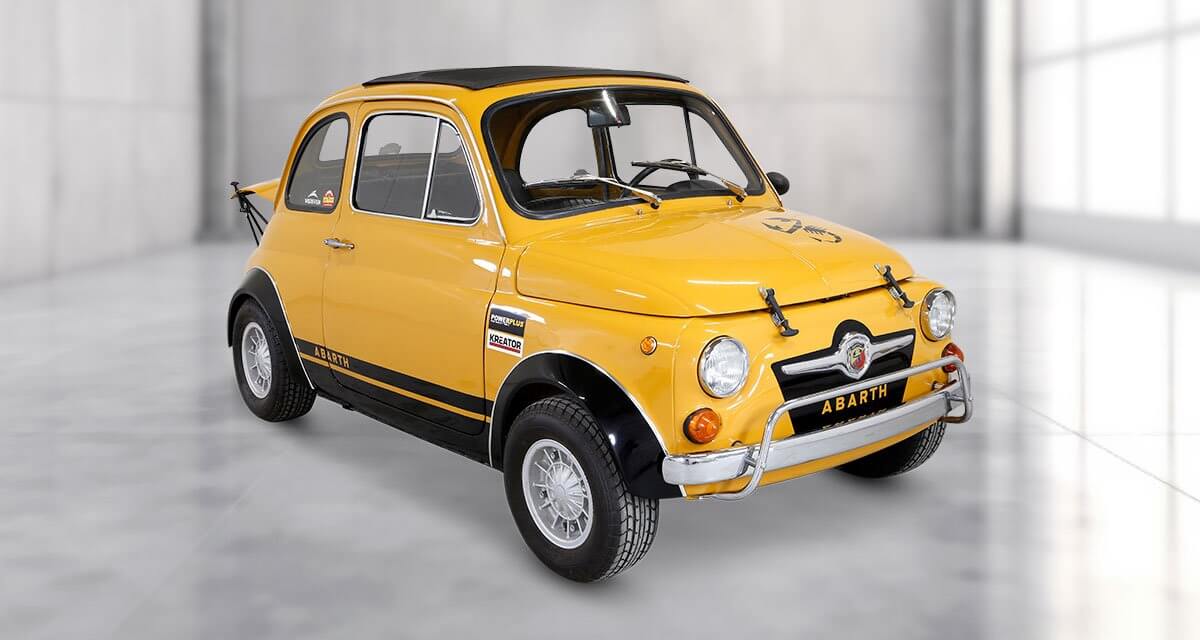 |
Fiat Nuova 500: design, weight saving, and quick adaptationsThis reduced the car’s weight and saved on steel. In later versions, the canvas section was shortened to only cover the front seats. The Nuova 500 was designed by Dante Giacosa, who saw his creation as an alternative to the popular scooters of the time, especially those from Piaggio and Lambretta. Initially, the 500 was not warmly received by the public, prompting a swift response from Fiat. |
Fiat 500: evolution, upgrades, and the successful 500 LJust three months after its launch, at the Turin Motor Show in October 1957, Fiat introduced an updated version available in two trims, Economique and Normal. These now produced 15 bhp, had four seats, and offered improved equipment—especially in the Normal trim. Over the years, the 500 saw several upgrades. In 1965, the doors that opened against the direction of travel, known as ‘suicide doors’, were replaced with conventional front-hinged ones. The most successful version was the 500 L (Lusso), launched in 1968, with 407,365 units produced in 1970 alone. |
 |
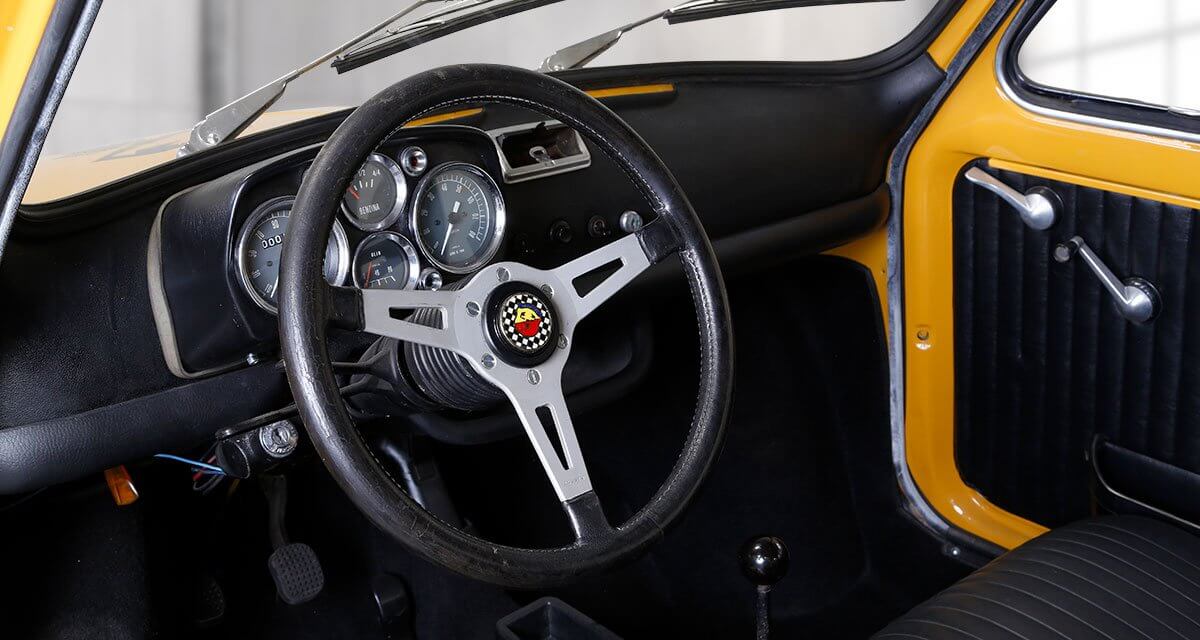 |
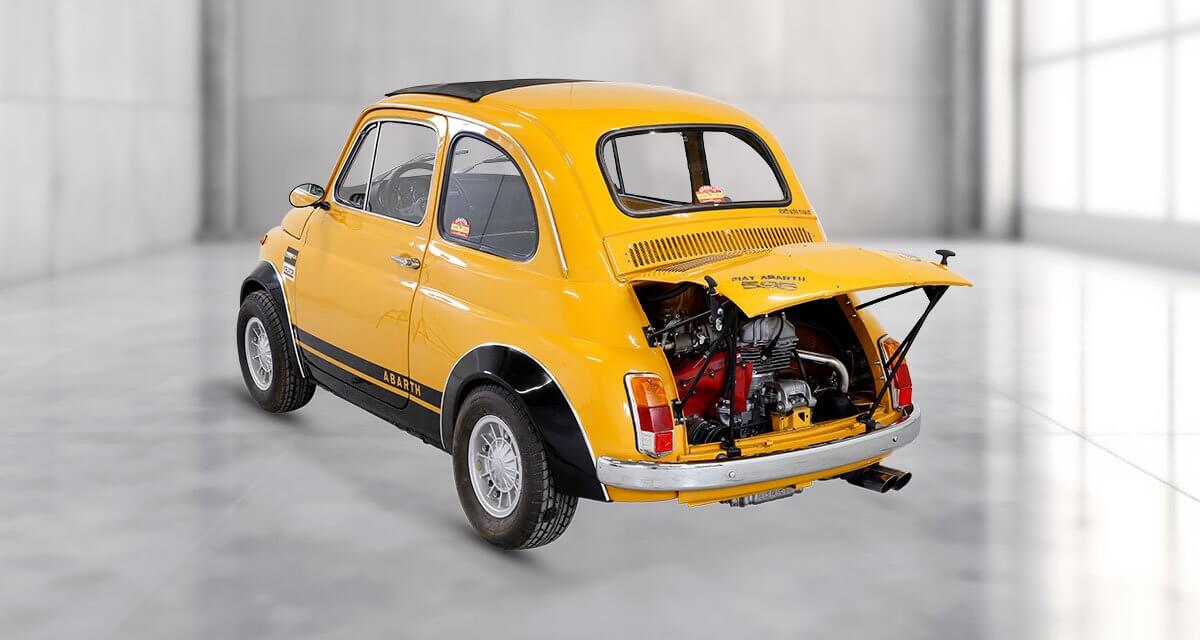
Abarth 595 SS Competizione: the ultimate Fiat 500 based on the LSeveral special versions of the 500 were developed, including by Austrian firm Steyr-Puch, but it was Abarth who was first to present its own version—at the Turin Motor Show in 1957, just three months after the Nuova 500’s launch. In the years that followed, Abarth introduced various upgraded editions. The museum in Lier houses two examples of the extremely rare 595 SS Competizione. Only 22 of the so-called Radial version were ever built. This Abarth is based on the 500 L but boasts several distinctive features. Externally, it sports signature Abarth badges, prominent wheel arch extensions, lightweight 10-inch alloy wheels (rather than the standard 12-inch), and an open engine lid, allowing space for the modified engine while also improving heat extraction and generating downforce while driving. Most remarkable of all is the engine. |
Abarth 595 SS Competizione Radial: engine power and historyMounted on the upright two-cylinder 594 cc engine block is a special Radial cylinder head with two overhead valves per cylinder, with the exhaust side on the right and the intake manifold with twin Weber 40DCOE carburettors on the left. This configuration optimises airflow of the fuel-air mixture. The compression ratio is relatively high, at 10.0:1. All Abarth modifications together result in 56 bhp—up from 32 bhp—at 7,400 rpm. The ochre-yellow example in the museum dates from 1970 and comes from Germany, where it has a history in hill climb racing. It was originally sold by Rallye Bitter, the German Abarth importer, operated by Erich Bitter—racing driver, Abarth collaborator, businessman, and later famous for his own line of Bitter sports cars based on Opel engineering. |
 |