
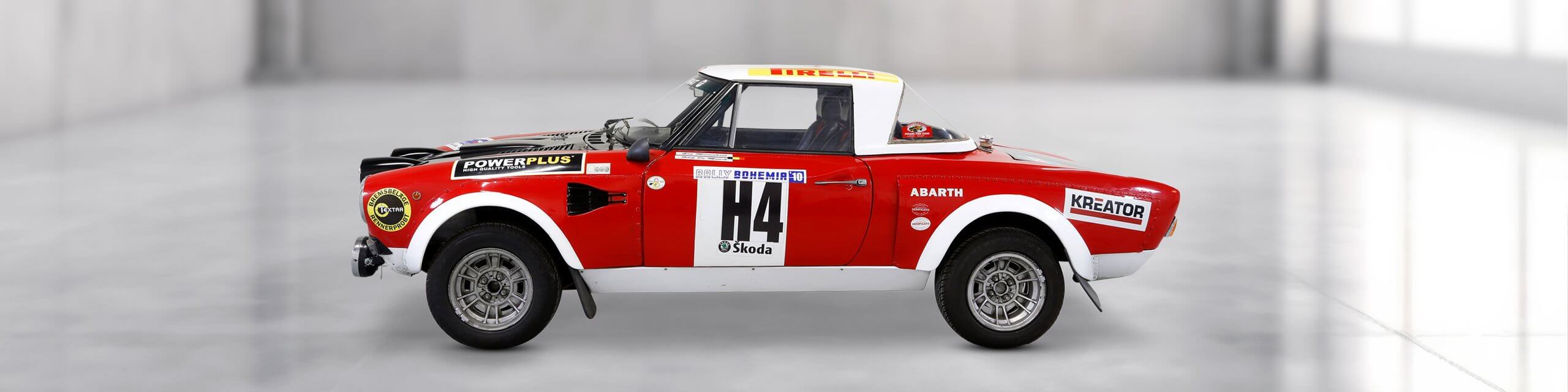
When Fiat launched the 124 in 1966, no one could have predicted that the Spider would play a crucial role in rallyingWhen Fiat launched the 124 in 1966, no one could have predicted that the Spider would become pivotal in the history of both Fiat and Abarth in motorsport. The roadster, styled by Tom Tjaarda at Pininfarina, was initially intended as a stylish cruiser, but over the years, the 124 Spider gradually evolved into a formidable rally car. |
 |
Fiat 124 Spider: rally debut and early successesThe rally debut didn’t come at Fiat’s initiative, but rather from private teams who began trusting the 124 Spider from 1969 onwards, still fitted with a modest 1438 cc engine with twin overhead camshafts, like the one in the 124 S saloon. The encouraging results of these private initiatives were inspiring. In 1970, Fiat introduced the 1608 cc engine producing 110 bhp. Fiat also officially supported Alcide Paganelli and Ninni Russo, who went on to win the Italian Rally Championship that year. |
Fiat Abarth 124 Spider: rally rise and victoriesFor Fiat, this was a clear signal to go all in and expand their efforts beyond Italy. In 1971, Fiat acquired Abarth, which became the official racing department of the Turin carmaker. Results quickly followed. In 1972, Raffaele Pinto and Gino Macaluso claimed victory at the Costa Brava Rally. That year saw five more wins with the Fiat Abarth 124 Spider, culminating in the European Championship title for Pinto and Macaluso. The 124 Spider was further upgraded, including the introduction of an 1839 cc engine producing first 128 and later 170 bhp. |
 |
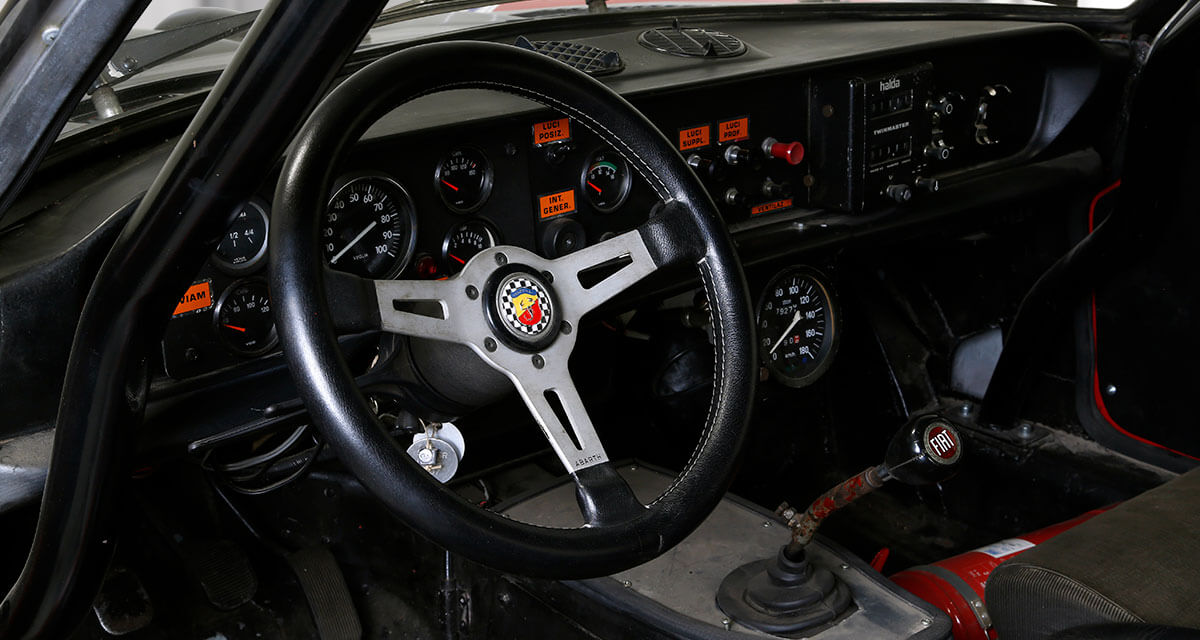 |
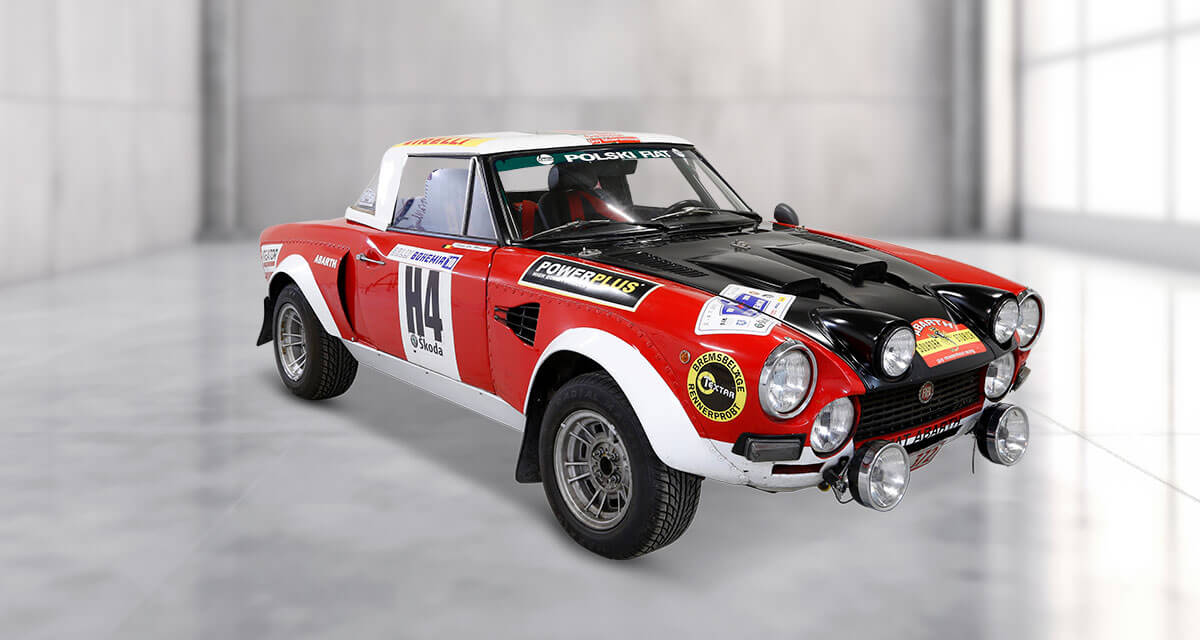
Fiat Abarth 124 Spider Group 4: power and history combinedThe ultimate version featured a special 16-valve cylinder head and Weber 48IDF carburettors, delivering 210 bhp. Only six factory cars were built, two of which were delivered to Polski Fiat. The museum car is one of those, fully restored by GMR to original specifications. This particular car, which achieved third place in the European Championship, was driven in Poland by Andrzy Jarozewicz, who was head of the R&D department at FSO. He was also the son of former Polish Prime Minister Piotr Jaroszewicz, who was assassinated in 1992. The Fiat Abarth 124 Spider Group 4 stood out not only because of its engine. |
Fiat 124 Abarth Rally: weight-saving and performanceSeveral measures were taken to reduce the overall weight to just 890 kilograms, including the removal of bumpers and use of a lightweight bonnet with extra air intakes and integrated spotlights. As with less powerful versions, the bodywork was fitted with a hardtop for safety. Also notable are the widened fenders, the rear ones featuring air intakes to cool the brakes. The museum car has participated in the Bohemian Rally in Prague and various hill climb events — such as Vernasca Silver Flag — and demonstration runs. Production of the Fiat 124 Abarth Rally began in 1972 and ended in 1975. A total of 995 units left the Abarth workshops, only six of which were fitted with the 16-valve engine. |
 |